Before you book
The questions men actually ask.
How do I know if it's chest fat or gynecomastia?
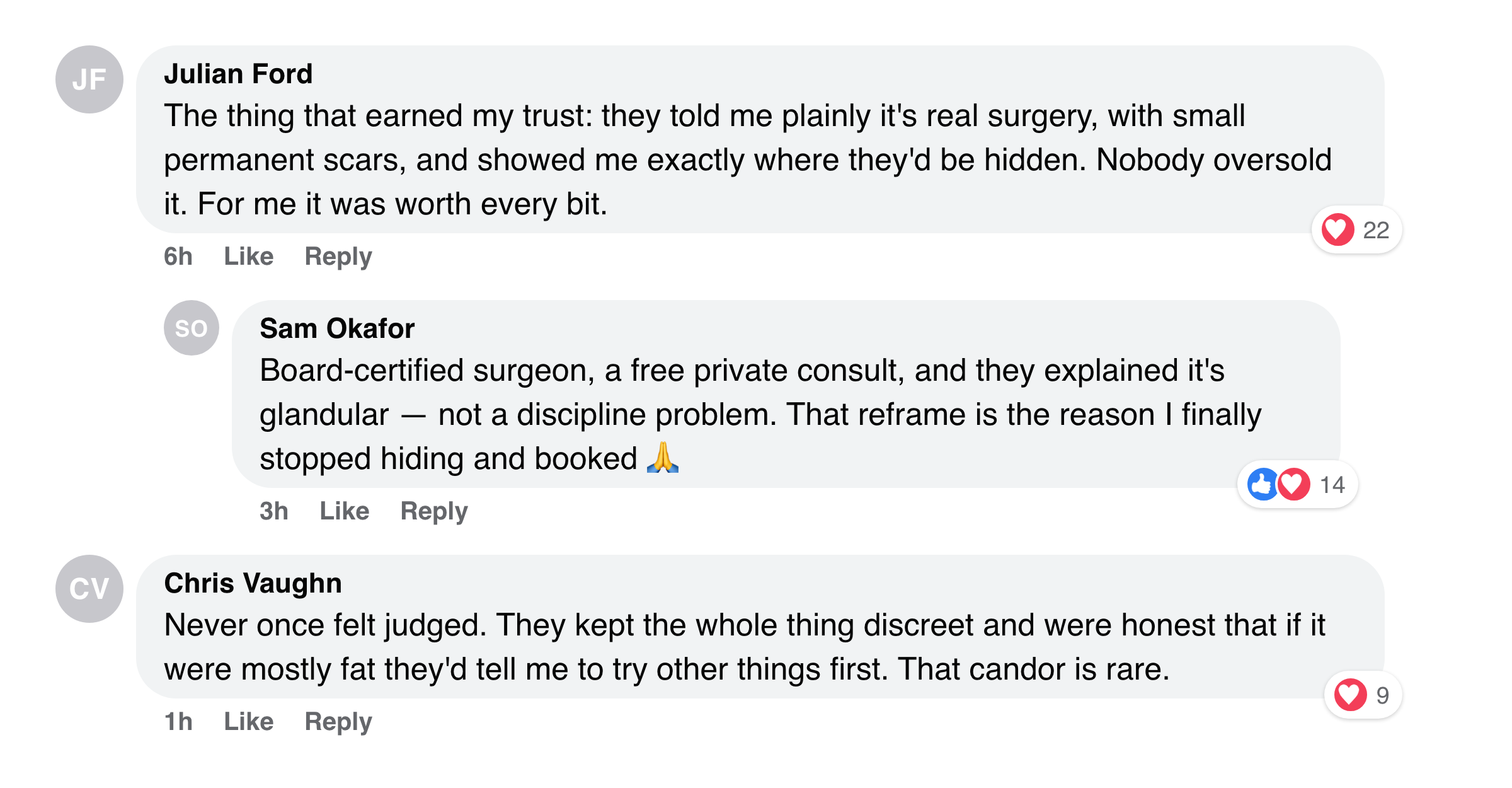
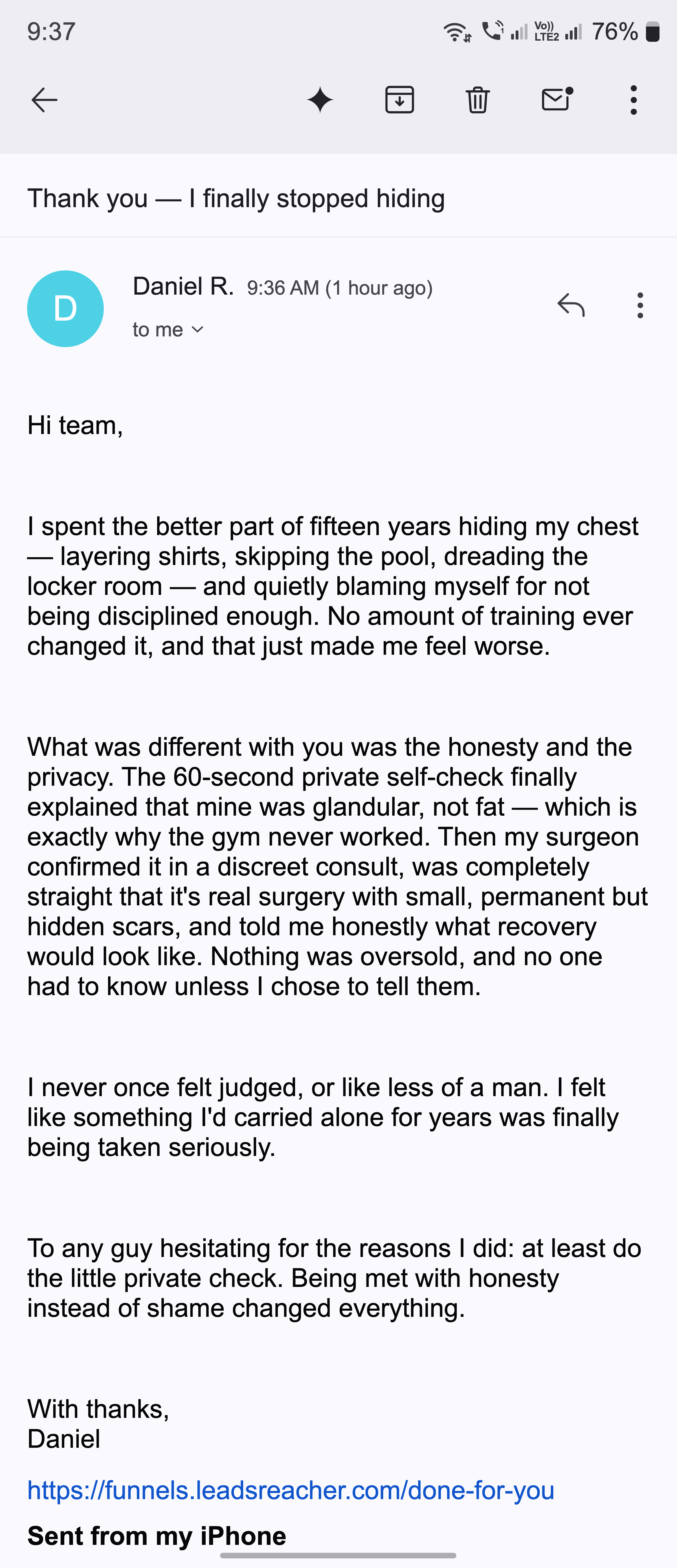
Gynecomastia is glandular tissue — usually a firm or rubbery disc right under the nipple that stays even when you're lean and resists training. Chest fat is softer, spread across the chest, and shifts as your weight changes. The 60-second private self-check gives you a first read, and a board-certified surgeon confirms which it is at your consult. It never diagnoses on its own.
Will it come back after surgery?
Removal of the treated glandular tissue is permanent — that gland doesn't grow back. Because the chest can still be affected by significant future weight gain, certain medications or anabolic steroid use, we frame it as a permanent correction with those honest caveats, never a blanket "gone forever, no matter what" guarantee.
What about scars — will I look operated-on?
It's real surgery, so there are small, permanent incisions — typically at the edge of the areola, placed to stay discreet. The goal is a flat, natural, masculine contour that looks like you, not an obviously operated result. Your surgeon shows you exactly where any scar would sit.
Can it be done awake, without general anesthesia?
For some lower-grade cases, yes — it can be done awake under local anesthesia. Whether that's safe and right for you depends on your case, and your surgeon confirms the anesthesia plan at your consult. IV sedation is the other common option.
How discreet is this, really?
Discretion is built into every step: a private self-check with no name until the end, virtual or in-office consults, neutral appointment reminders and billing descriptors, plain unbranded aftercare packaging, and a recovery plan that gets you back to normal quietly. No one has to know unless you choose to tell them.
What does it cost, and can I finance it?
Pricing follows your gynecomastia grade — milder cases cost less than more involved ones — so your exact, all-inclusive number is set privately at your consult rather than shouted on an ad. All-in gynecomastia surgery typically runs roughly $6,500–$14,000 depending on grade (demo figures). Financing is available from about $99/month* through a soft check that never touches your credit score; we never imply guaranteed approval.
Is gynecomastia ever covered by insurance?
Sometimes. Persistent, painful, Grade II–IV gynecomastia that's lasted over a year and hasn't responded to treatment may be considered medically necessary and covered by some plans, with exam, imaging or photos and prior authorization. Coverage depends entirely on your plan and criteria — we verify your benefits and file the paperwork, but we never promise approval, and there's no cash price shown on that path.
Is it surgery? How much downtime?
Yes — it's real elective surgery, in an accredited facility, by a board-certified surgeon, not a walk-in procedure. Recovery is generally lighter than people brace for: many men are back to desk work within days and ease back into training over a few weeks in a compression garment. Timelines are typical ranges and individual, never guaranteed.
I'm a teenager (or my son is) — should we do this now?
Often, no — not yet. In younger men still going through puberty, chest changes very frequently settle on their own over time, so the right first step is a conservative, honest conversation with a specialist, ideally with a parent or guardian involved. This is a consult-room discussion, and we'd rather wait than operate too early.
How do I know if I'm even a candidate?
The 60-second private self-check gives you a first read and points you to the right path. Your candidacy, whether it's glandular or fatty, and the right timing are all confirmed by a board-certified surgeon at your free, discreet consult. If it's not the right step for you yet, we'll tell you honestly.